Carpet Seam Repair in Kanata
A carpet seam is the one place a floor can fail without anything actually wearing out. It peaks into a ridge, opens into a visible line, or frays where it meets a doorway — and in every case the carpet either side of it is perfectly good. Kanata Carpet Pros re-cuts, re-tapes and heat-bonds seams across Kanata so the join goes back to being invisible, in a single visit, without touching the rest of the room.
- Peaked seams flattened properly
- Split joins re-cut and re-bonded
- Fresh hot-melt tape, never patched over
- Frayed doorway edges rebuilt
- Pile direction matched at the join
- Single-visit, fixed written price
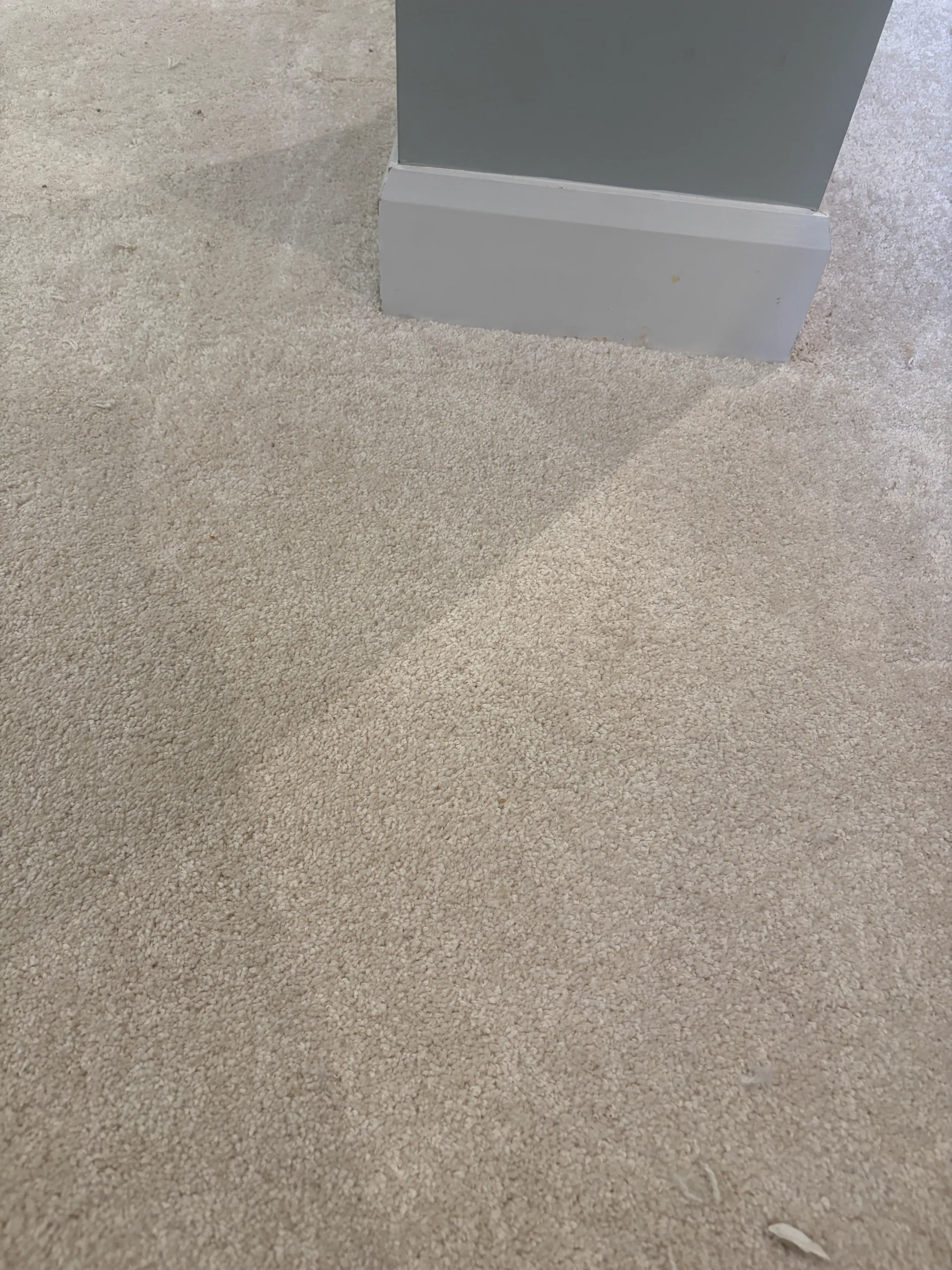
What a proper seam repair involves
Re-bonding a seam is four steps, and skipping any one of them is why some seam repairs come apart again within a year.
Cut back to a clean, straight edge
Whatever failed took the edges with it — frayed tufts, stretched backing, old adhesive. Both sides are trimmed back to straight, square edges along the same line, because two ragged edges pushed together will always read as a seam no matter what goes underneath them.
Flatten what the seam is sitting on
A seam telegraphs whatever is under it. Old tape residue, a proud staple, a ridge of dried adhesive, or a lifted sub-floor joint will push the join upward forever. All of that gets scraped or fastened flat before new tape goes anywhere near it.
Fresh hot-melt tape and a controlled iron
New seam tape is centred under the join and the iron drawn along it slowly enough to melt the adhesive through the full width, with both edges held level and butted — not compressed. Too fast and the bond is patchy; too much side pressure and you have built a fresh peak.
Weight it, then groom the pile
The seam is loaded while the adhesive sets, then the pile is worked across the join with a seam roller so the fibres from each side interlock. That last step is what takes the line from mended to invisible.
The seam mistakes we get called in to undo
Seam failures are almost always installation decisions catching up with the homeowner years later. Recognising which one you have tells you whether a repair will hold.
The seam was placed in the traffic lane
A seam running down the middle of a hallway takes concentrated foot traffic across the join from day one. Placed to the side, or across a doorway where feet cross it rather than travel along it, the same seam lasts decades. We cannot always move one, but where the layout allows we relocate rather than repeatedly repair.
Pile direction was ignored
Carpet has a nap, and two pieces joined with the nap running opposite ways will read as two different shades under any light in the room. No tape fixes that. It has to be cut and reset with both sides running the same way, which is why we check nap before quoting rather than after.
Latex or glue used instead of tape
Seams closed with construction adhesive or seam sealer alone go brittle and crack. The repair is to cut the hardened material out entirely and start again with proper hot-melt tape — patching more glue on top of failed glue buys a few months at most.
The room was never properly stretched
A loose floor puts every bit of its movement through the weakest line, and that is the seam. Re-bonding a seam in a room that ripples is treating the symptom; the stretch has to be corrected in the same visit or the join will simply open again.
Why seams open in a Kanata winter
Seam calls are strongly seasonal here, and the reason is the same physics that causes ripples: Ottawa's indoor air changes more between January and July than most people's floors are built for.
Dry winter air shrinks the backing
Forced-air heat drops indoor humidity for months. Carpet backing contracts, the whole floor pulls very slightly toward the walls, and the tension concentrates at the seam because that is the only line that is bonded rather than woven. Seams that were marginal in October announce themselves in February.
Summer humidity does the opposite
Come July the backing relaxes and expands, the slack gathers, and a seam that was pulled open in winter can peak instead. If a join looks different to you at different times of year, that is not your imagination — and it is a good reason to fix it properly rather than wait for it to settle.
Seam work is booked as a single visit and usually within the week, across Kanata and the west end and south through Richmond and Manotick. The seam repairs people mention afterwards are the ones nobody can find again.
Seam repair questions
Why has a ridge appeared along my carpet seam?
That is a peaked seam. The two edges have been pushed together under tension and the join has lifted into a ridge rather than lying flat. It usually means the seam was closed with too much compression or over a hump in the sub-floor. Re-cutting the edges and re-bonding on a flat bed takes it back down.
Can a split carpet seam be re-joined, or does the room need replacing?
It can nearly always be re-joined. A seam that has opened is a failed tape line, not failed carpet — the tape has let go, or was never heated properly across its full width. We cut back to clean edges, run fresh hot-melt tape underneath, and draw a heat iron along it while holding both sides level.
Do carpet seams show after a repair?
Done properly, a repaired seam is visible only if you know exactly where to look and you get down on the floor. The trick is pile direction and edge preparation, not the tape. A seam that stands out afterwards was almost always cut without regard for which way the nap runs.
How long does a seam repair take in a Kanata home?
A single hallway or doorway seam is usually an hour to ninety minutes including moving furniture. The heat bond needs a few minutes under weight before anyone walks on it, and after that the floor is in normal service — there is no curing period to schedule around.
Seen a line across your hallway lately?
A photo taken low, along the length of the seam, tells us almost everything we need to quote it.